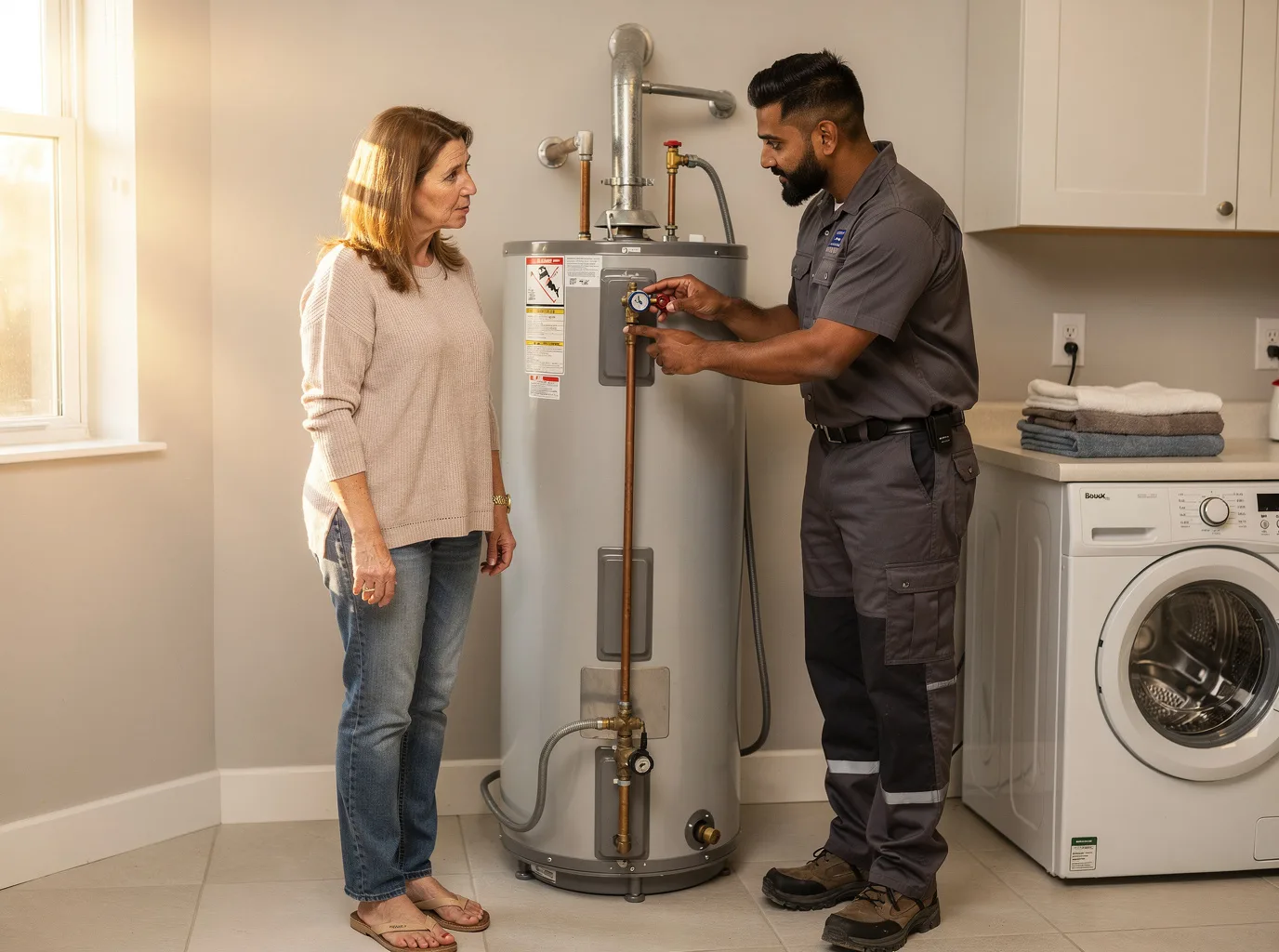
A house left unheated or lightly heated over winter is at real risk of frozen and split pipes. Vacation homes, rentals between tenants, and houses on the market all fall into this group. Winterization removes water from the plumbing so there is nothing left to freeze.
What a winterization visit includes
- Shutting off the main supply and, on a well, the pump
- Draining the water heater and turning off its fuel or power
- Opening every faucet and draining the lines from the lowest points
- Blowing out remaining water with compressed air
- Pouring non-toxic RV-style antifreeze into toilet bowls, tanks and every drain trap
- Tagging fixtures so nobody turns water back on without refilling the system correctly
Partial protection for occupied homes
If the house stays heated but has a few problem spots, a full drain is not needed. Options include insulating pipes in crawl spaces and garages, adding heat cable, sealing gaps where cold air reaches pipes, and installing a low-temperature alarm that alerts your phone if the indoor temperature drops.
Spring start-up
Reopening the system in spring is the reverse: closing drain valves, refilling the water heater before power goes back on, flushing antifreeze from the traps, and checking each line for leaks under pressure. A water heater turned on while empty can burn out its elements.
We book winterization and spring start-up visits with plumbers in Boyd, WI.